410-696-7550
Squirrel Removal Pro Baltimore
Squirrel Removal Pro Baltimore is a professional pest control company that provides nuisance squirrel removal services in Baltimore, MD. We humanely solve conflicts between people and squirrels, most commonly in the attics or walls of homes. We are a full-service nuisance wildlife control company
servicing the greater Baltimore region. We provide both residential and commercial services, and are fully licensed and insured in Maryland. In solving pest squirrel conflicts, we utilize a full array of services, from humane trapping and relocation, to squirrel prevention and damage
repairs, to dead squirrell removal, attic cleanup, and more. We offer competitive pricing and the best service in Baltimore. Every situation is different, so give us a call at 410-696-7550 now to discuss your wild animal problem, and get a price quote over the phone. We
answer our phones 24-7-365, work on weekends, and can usually schedule a same-day or next-day appointment to solve your squirrel problem!
Is it legal for me to trap a Baltimore squirrel?
Squirrels are family members of Sciuridae. The Squirrel family includes chipmunks, ground squirrel, tree squirrel, flying squirrel, prairie dogs, and marmots. Squirrels are generally small animals, and typically have slender bodies with large eyes and bushy tails. In general, their fur is silky and soft.
Squirrels live in almost every habitat - from semi-arid desert to tropical rainforest, avoiding only the driest of deserts and high polar regions. They are predominantly herbivorous, subsisting on nuts and seeds, but many will eat insects and even small vertebrates.
Squirrels have an excellent sense of vision because of their large eyes and they have a good sense of touch. Baltimore squirrels can have a lifespan of 5 to 10 years in the wild. And others can survive 10 to 20 years in captivity.
Why are they considered as Pests?
Maryland squirrels are generally persistent and inquisitive animals. They are notorious for persistently trying to overreach obstacles in order to eat from bird feeders. They are skilled climbers and they primarily live on trees. Some species of squirrels also thrive in cities where they have adapted to humans.
Squirrels are considered pests by property owners. This is because of their tendency to chew on various uneatable and eatable objects and their obstinate persistence in trying to get what they want. Their characteristic constant chewing also aids the maintenance of their sharp teeth. Because their teeth grow continuously, chewing prevents their over-growth. Squirrels will chew through metal and plastic to get to a food source.
Households in areas with a heavy squirrel population must be very vigilant in keeping basements, sheds, and attics secure to prevent property damage caused by nesting Baltimore squirrels.
Squirrels are a serious fire hazard when they enter into buildings. They use tree branches to access uncovered chimneys. They often uncover power cables and chew on the electrical insulation. The result of uncovering conductors can be short circuits that can cause a fire. For this reason, a squirrel living inside buildings cannot be safely disregarded. A squirrel nest will also cause problems with excreting, noise, structural damage, and even unpleasant odors.
Some homeowners search for more interesting ways of handling with this problem. These ways include gathering fur from pets and placing them in the attic. It is hoped that this fur will indicate to nesting squirrels that a possible predator roams, and will encourage moving out. Odoriferous repellents, including ammonia and mothballs, are generally ineffective in taking out squirrels from buildings.
To avoid chewing on an object, it can be covered or coated or with something to make it taste unpleasant: for example, a soft cloth doused with chili pepper powder or paste. To stay effective, the coating must be renewed always. Poisoning squirrels can be debatable because of the risks to innocent parties, and because the odor of a dead squirrel in a wall or attic cavity is very awful and lasting.
Is it legal to Trap a Squirrel?
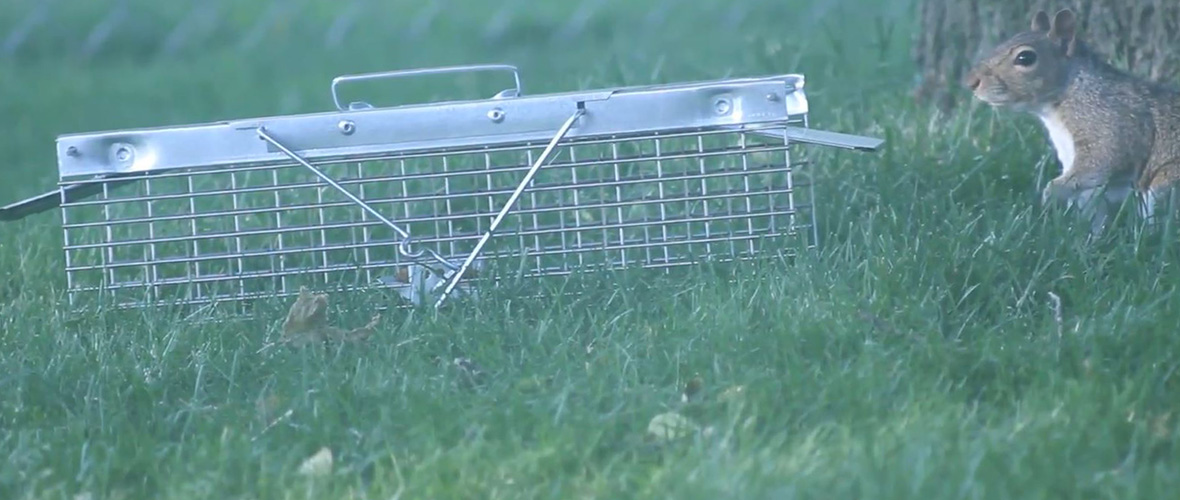
Trapping is sometimes necessary to eliminate Baltimore squirrels from residential structures. Effective baits include nuts, fruit, seeds peanut butter, and vanilla extract.
It is legal to kill squirrels and most people do it by shooting and trapping. But it must be done in a humane manner or you will be punished under animal welfare laws. It is illegal to kill a squirrel by asphyxiation, drowning, or squeeze to death under The Animal Welfare Act 2006.
Will Repellents Get a Baltimore Squirrel Out of the Attic?
How to Keep Balitmore Squrirels Away From Your Property